pdf | 16.25 MB | English | Isbn: 0190876107 | Author: Fuglestad, Finn; | Year: 2018
Description:
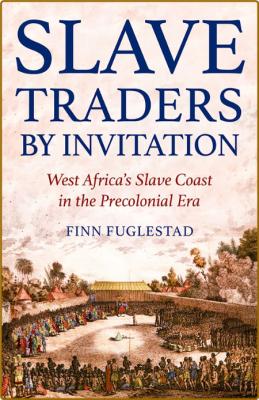
The Slave Coast, situated in what is now the West African state of Benin, was the epicentre of the Atlantic Slave Trade. But it was also an inhospitable, surf-ridden coastline, subject to crashing breakers and devoid of permanent human settlement. Nor was it easily accessible from the interior due to a lagoon which ran parallel to the coast. The local inhabitants were not only sheltered against incursions from the sea, but were also locked off from it. Yet, paradoxically, it was this coastline that witnessed a thriving long-term commercial relation-ship between Europeans and Africans, based on the trans-Atlantic slave trade. How did it come about? How was it all organised? And how did the locals react to the opportunities these new trading relations offered them? The Kingdom of Dahomey is usually cited as the Slave Coast's archetypical slave raiding and slave trading polity. An inland realm, it was a latecomer to the slave trade, and simply incorporated a pre-existing system by dint of military prowess, which ultimately was to prove radically counterproductive. Fuglestad's book seeks to explain the Dahomean 'anomaly' and its impact on the Slave Coast's societies and polities.
Category:History of West Africa, West African History, Slavery & Emancipation History
We need your support!
Make a donation to help us stay online

Bitcoin (BTC)
bc1q08g9d22cxkawsjlf8etuek2pc9n2a3hs4cdrld

Bitcoin Cash (BCH)
qqvwexzhvgauxq2apgc4j0ewvcak6hh6lsnzmvtkem

Ethereum (ETH)
0xb55513D2c91A6e3c497621644ec99e206CDaf239

Litecoin (LTC)
ltc1qt6g2trfv9tjs4qj68sqc4uf0ukvc9jpnsyt59u

USDT (ERC20)
0xb55513D2c91A6e3c497621644ec99e206CDaf239

USDT (TRC20)
TYdPNrz7v1P9riWBWZ317oBgJueheGjATm