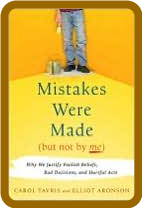
epub | 302.57 KB | English | Isbn: B003K15IOE | Author: Carol Tavris | Year: 2020
Description:
A NEW EDITION UPDATED IN 2020 • Why is it so hard to say "I made a mistake" — and really believe it?
When we make mistakes, cling to outdated attitudes, or mistreat other people, we must calm the cognitive dissonance that jars our feelings of self-worth. And so, unconsciously, we create fictions that absolve us of responsibility, restoring our belief that we are smart, moral, and right—a belief that often keeps us on a course that is dumb, immoral, and wrong. Backed by decades of research, M istakes Were Made (But Not by Me) offers a fascinating explanation of self-justification—how it works, the damage it can cause, and how we can overcome it. Extensively updated, this third edition has many recent and revealing examples, including the application of dissonance theory to divisive social issues such as the Black Lives Matter movement and he said/she said claims. It also features a new chapter that illuminates how cognitive dissonance is playing a role in the currently polarized political scene, changing the nation's values and putting demacy itself at risk.
"Every page sparkles with sharp insight and keen observation. Mistakes were made—but not in this book!" —Daniel Gilbert, author of Stumbling on Happiness
"A revelatory study of how lovers, lawyers, doctors, politicians—and all of us—pull the wool over our own eyes . . . Reading it, we recognize the behavior of our leaders, our loved ones, and—if we're honest—ourselves, and some of the more perplexing mysteries of human nature begin to seem a little clearer." —Francine Prose, O, The Oprah Magazine
Category:Social Psychology & Interactions, Cognitive Psychology, Business Decision-Making
Download from RapidGator
Download from NitroFlare
We need your support!
Make a donation to help us stay online

Bitcoin (BTC)
bc1q08g9d22cxkawsjlf8etuek2pc9n2a3hs4cdrld

Bitcoin Cash (BCH)
qqvwexzhvgauxq2apgc4j0ewvcak6hh6lsnzmvtkem

Ethereum (ETH)
0xb55513D2c91A6e3c497621644ec99e206CDaf239

Litecoin (LTC)
ltc1qt6g2trfv9tjs4qj68sqc4uf0ukvc9jpnsyt59u

USDT (ERC20)
0xb55513D2c91A6e3c497621644ec99e206CDaf239

USDT (TRC20)
TYdPNrz7v1P9riWBWZ317oBgJueheGjATm